


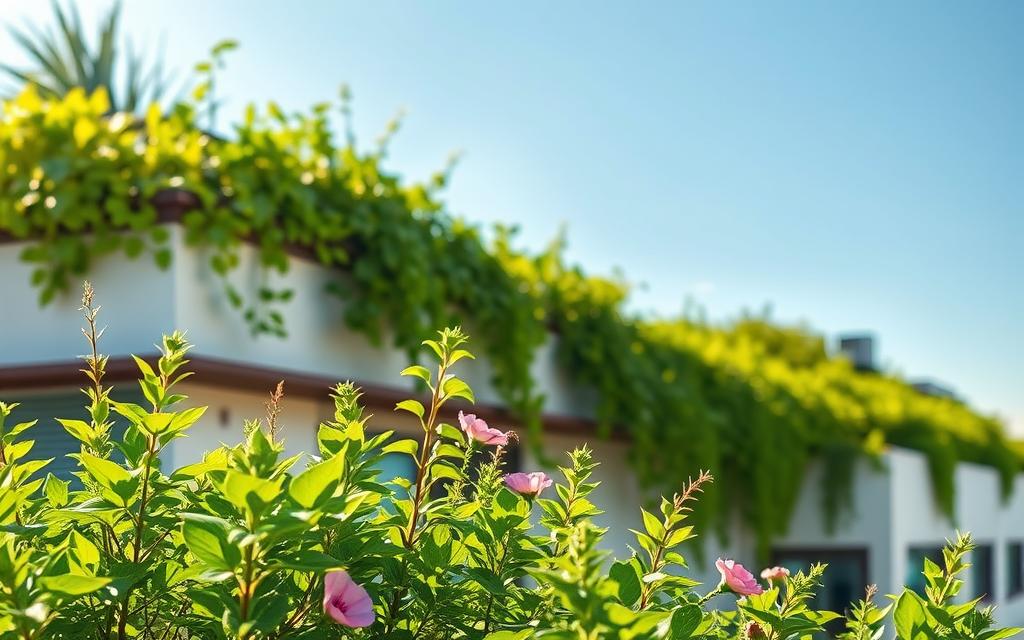
Modern urban architecture is all about finding new ways to blend buildings with nature. One key approach is using sustainable roofing systems that cover rooftops with plants.
These systems add extra layers to rooftops. They include waterproof membranes, drainage, and special soil for plants.
The plants on rooftops create a mini-ecosystem. This not only helps the environment but also adds green spaces in cities.
In Europe, governments have backed this technology a lot. Their success shows how eco-friendly building design can work in real projects.
Green roofs can be set up in different ways. They can be installed as modules or laid down freely. Both methods help keep buildings cool and manage rainwater well.
What is Green Roof Technology
Green roof technology is a new way to design buildings. It turns rooftops into living spaces. This system combines plants with buildings, improving the environment and keeping the structure strong.
Fundamental Principles and Core Components
Green roof tech is built in layers. Each part helps plants grow while keeping the building safe. There are five main layers that work together.
The bottom layer is a waterproof membrane to stop water from getting in. Next, a root barrier keeps the membrane safe from roots. The drainage layer handles extra water, and a filter fabric stops soil from blocking the drainage. The growing medium supports the plants, and the plants finish the roof.
Related Posts:
- How Technology Impacts Us The Broad Effects on Daily Life

- How to Make Money in Information Technology Careers…

- What Is a Technology Professional Roles Skills and…
- How to Improve Your Technology Skills A Guide for…

- What Are Ethics in Information Technology A Guide to…
- How Advanced Is China in Technology A Look at Its…
These green roof components must work well together. The plants chosen must be able to grow well on rooftops. This helps the environment.
| Component Layer | Primary Function | Common Materials | Thickness Range |
|---|---|---|---|
| Waterproof Membrane | Prevents water infiltration | EPDM, PVC, TPO | 1.5-3.0 mm |
| Root Barrier | Protects membrane from roots | Polyethylene, copper | 0.5-2.0 mm |
| Drainage Layer | Manages excess water | Plastic panels, gravel | 25-100 mm |
| Filter Fabric | Prevents soil clogging | Geotextile matting | 1-3 mm |
| Growing Medium | Supports plant growth | Lightweight soil mix | 80-150 mm |
Historical Context and Modern Evolution
Vegetated roofs have been around for a long time. The Hanging Gardens of Babylon and Scandinavian sod roofs are early examples. But, modern green roof tech really took off in the 20th century.
Germany led the way in the 1960s, thanks to environmental awareness and urban planning. The government offered support and incentives, boosting the market in Europe.
France and others followed Germany’s example, developing their own standards. Government support helped green roof tech grow and improve.
Today, green roof tech keeps getting better with new materials and methods. It’s easier to maintain and works better. Knowing how it works helps architects and builders make greener cities.
Green roof tech is now used worldwide to solve urban problems. New ideas like solar panels and smart irrigation systems make it even better for the environment.
Types of Green Roof Systems
Green roofs come in different designs, maintenance levels, and ecological roles. Knowing the various types helps architects and owners pick the best fit for their projects and green goals.
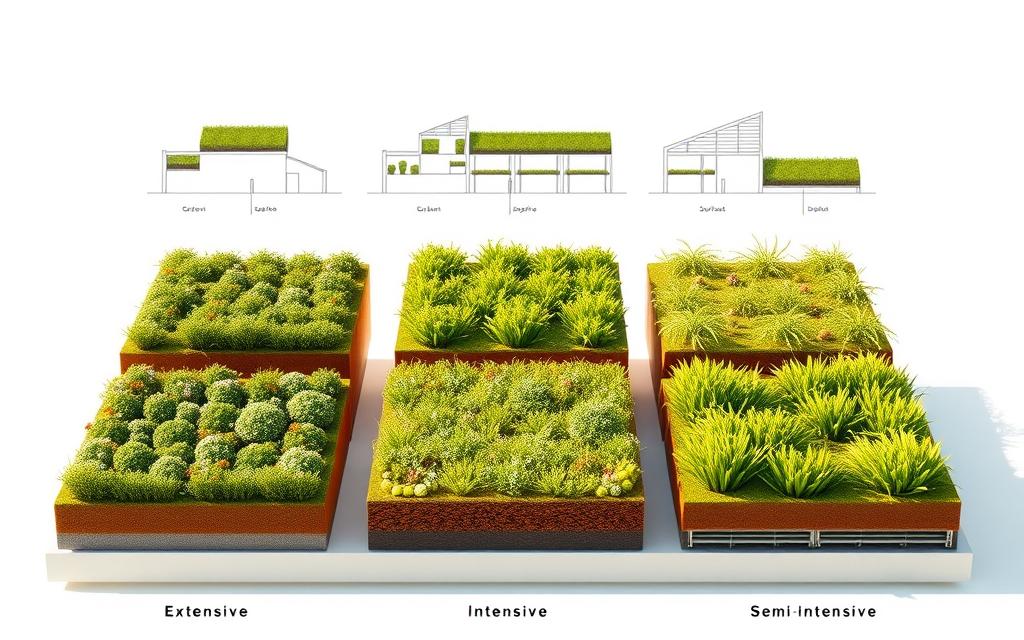
Extensive Green Roofs: Minimal Maintenance Solutions
Extensive green roofs are the simplest and least demanding. They have shallow soil, usually 2 to 6 inches deep. This limits plants to hardy, drought-tolerant ones.
Plants like sedums, mosses, and grasses are common here. They need little water and grow fast. This makes them great for retrofitting and buildings that can’t hold much weight.
They need only occasional checks and weeding. You might not need to water them often, except in very dry times. This makes them perfect for big commercial places where it’s hard to get to.
Intensive Green Roofs: Complete Rooftop Gardens
Intensive green roofs turn rooftops into full gardens. They have deeper soil, up to 12 inches, for more plants like shrubs and trees.
They offer green spaces in busy cities. You can add paths, seats, and even water features. But, they need more care and strong buildings.
They need regular watering, feeding, and gardening. They’re heavy, so buildings need special checks before installing. They’re a big investment in making cities better and increasing property value.
Semi-Intensive Systems: Balanced Options
Semi-intensive systems are a mix of extensive and intensive roofs. They have 4 to 8 inches of soil for more plants but are not too heavy.
They use plants that need little water and add beauty and value. They need some watering but not as much as intensive gardens. They’re good for buildings that want to look nice but don’t want too much work.
They’re popular for buildings that want to look good but don’t want too much upkeep. They fit many budgets and climates, making them flexible and appealing.
| System Type | Growing Media Depth | Maintenance Level | Plant Diversity | Structural Load |
|---|---|---|---|---|
| Extensive | 2-6 inches | Low | Limited | Light |
| Semi-Intensive | 4-8 inches | Moderate | Moderate | Medium |
| Intensive | 6+ inches | High | High | Heavy |
Choosing between extensive, intensive, and semi-intensive roofs depends on many factors. It’s about the building’s strength, how much care you can give, your budget, and what you want it to look like. Each type has its own benefits for making buildings greener and cities better.
Environmental Benefits and Sustainability Impacts
Green roof technology is a game-changer for urban sustainability. It offers many environmental benefits beyond just looking good. These living roofs help balance nature and solve big city problems in a natural way.
Stormwater Management and Urban Hydrology
Big cities often have lots of hard surfaces that cause stormwater to run off too fast. This can lead to flooded streets and overwhelmed drainage systems. Green roofs act like natural sponges, soaking up rainwater and slowly releasing it.
Studies by the Environmental Protection Agency show that stormwater management green roofs can cut down peak flow rates by up to 65%. This slower release of water helps cities handle rain better and cleans the water naturally.
Key hydrological benefits include:
- Reduction in combined sewer overflows
- Natural filtration of heavy metals and nutrients
- Decreased erosion from rapid runoff
- Replenishment of groundwater reserves
Urban Heat Island Mitigation and Microclimate Regulation
The urban heat island effect makes cities up to 12°F warmer than the countryside. Regular roofs absorb and send back solar energy, making cities even hotter.
Green roofs use evapotranspiration and reflect solar energy, cooling the surface by 30-40°F. This cooling effect helps the whole area, making it easier to cool buildings without using as much air conditioning.
“Green roofs are a top solution for fighting the urban heat island effect. They also bring many other benefits for a sustainable city.”
The plants on green roofs keep indoor temperatures steady, saving energy and cutting down on carbon emissions. This helps buildings use less energy and pollute less.
Biodiversity Support and Ecological Habitat Creation
In cities, green roofs are key for biodiversity habitat creation. They provide a home for pollinators, birds, and insects, linking green spaces in the city.
By choosing the right plants, green roofs can support native species and special animals. Studies show that well-designed green roofs can have up to 25% of the insect diversity found in natural habitats.
Green roofs do more than just support species. They also:
- Help pollinate urban gardens
- Allow for genetic exchange between isolated species
- Offer educational chances for city dwellers
- Give people a chance to connect with nature
Adding green roofs to city planning is a smart way to care for the environment. They tackle many sustainability issues with one solution. These roofs show how cities can help nature, not just harm it.
Structural Design and Technical Requirements
Creating a successful green roof needs careful planning. You must focus on the structure and technical details. These are key to protecting the building and helping plants grow well.
Waterproofing Membranes and Root Barrier Systems
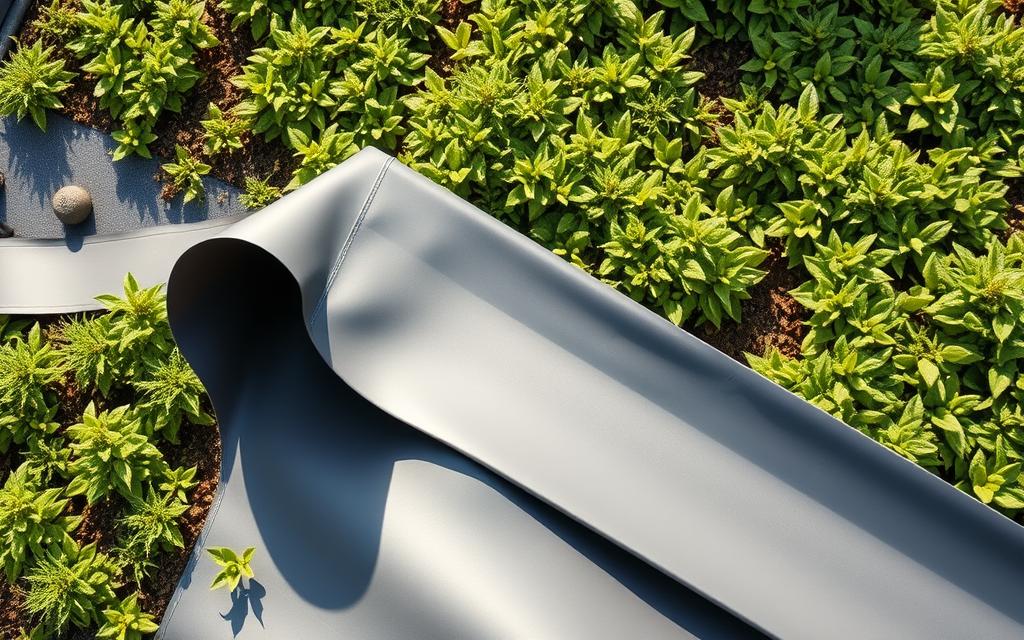
The waterproofing membrane roof is the first line of defence against water. It’s made from strong rubber or plastic materials. These materials can last for many years.
When choosing a membrane, consider a few things:
- It must resist chemicals and acids from fertilisers and plants.
- It should be strong against punctures from roots and sharp objects.
- It needs to be flexible to move with the building.
Root barriers also play a big role. They stop roots from damaging the waterproof layer. These barriers let water drain while keeping roots out.
Drainage Solutions and Irrigation Management
Drainage irrigation systems control water flow on the green roof. They keep the roof from getting too wet and ensure plants get enough water when it’s dry.
Drainage layers usually include:
- Lightweight plastic modules with water retention cups
- Gravel or expanded clay aggregates
- Geocomposite drainage mats with filter fabric
Irrigation systems can be simple or fully automated. Drip irrigation or subsurface systems save water and reduce evaporation.
Growing Media Composition and Vegetation Selection
The choice of growing media vegetation is very important. The media must give plants the nutrients they need while draining well and not being too heavy.
Good growing media often has:
- Lightweight materials like perlite or vermiculite
- Organic compost for nutrients
- Mineral parts for stability and drainage
Choosing the right plants depends on the roof, the weather, and how much care it can get. Sedums, native grasses, and flowers are good for extensive roofs. Intensive roofs can have shrubs and small trees with deeper media.
Matching the right growing media vegetation is key. It keeps plants healthy and reduces the need for upkeep. This balance helps create thriving rooftop gardens that need little care over time.
Economic Advantages and Performance Benefits
Green roofs offer more than just environmental benefits. They also bring economic gains that make them a wise choice for property owners. These systems change how we view roofing costs, turning them into long-term financial benefits.
Energy Efficiency Gains and Operational Cost Reductions
Green roofs act as natural insulators, cutting down on energy use all year round. The plants and soil create a barrier that keeps buildings cooler in summer and warmer in winter.
This natural insulation leads to lower energy bills. Studies show green roofs can cut air conditioning needs by up to 75% in summer. They also reduce heat loss by 26% in winter.
Green roofs help buildings meet strict energy rules. Many places offer incentives or tax breaks for using sustainable technologies.
Roof Longevity and Material Protection
Traditional roofs degrade fast when hit by UV rays and extreme temperatures. Green roofs protect the waterproofing layer from these harmful effects.
The plants on top act as a shield, making roofs last two to three times longer than usual roofs. This means less money spent on replacements and repairs over time.
Green roofs also need less upkeep. They stop problems like cracking and blistering that traditional roofs face. The upfront cost is worth it because of the savings on repairs.
| Roof Type | Average Lifespan | Maintenance Frequency | Replacement Cost per m² |
|---|---|---|---|
| Traditional Built-up Roof | 15-20 years | Annual inspections | £85-£120 |
| Green Roof System | 40-50 years | Bi-annual checks | £45-£75 |
| Difference | +167% longer | 50% less frequent | 40% lower cost |
Property Value Enhancement and Aesthetic Appeal
Green roofs make properties look better and add space. They can increase property value by 7-15% compared to similar places without them.
They turn empty rooftops into beautiful spaces. These can be gardens, recreational areas, or social spots. This adds real value and makes people happier.
Commercial buildings gain a marketing edge with green roofs. People want to work in green buildings. Green roofs show a commitment to the environment.
For more on the benefits of green roofs, check out our detailed look at advantages and disadvantages of green roofs in real projects.
Green roofs are becoming more appealing as energy costs go up and green building becomes common. They offer quick savings and long-term value, making them a smart choice for property owners.
Implementation Considerations and Challenges
Green roof technology needs careful planning and tackling several key factors. Each project has its own challenges. These must be well thought out to ensure the roof works well for a long time.
Structural Load Assessment and Engineering Evaluation
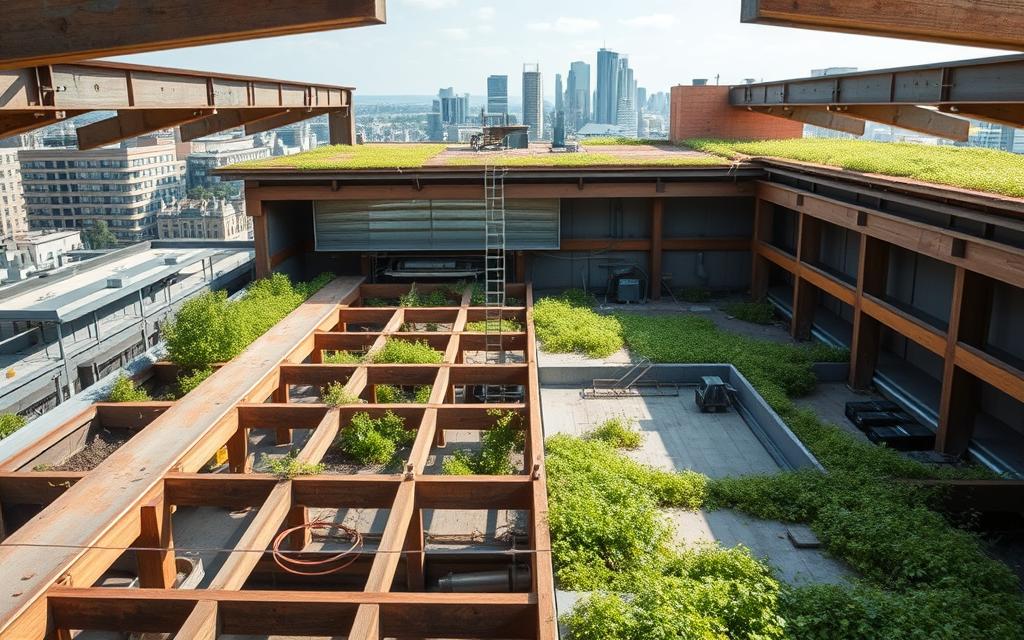
A detailed structural load assessment is the first step for any green roof. Buildings must be checked to see if they can handle the extra weight. This includes soil, plants, and water.
Engineers look at both the permanent and temporary weights. They check if the building can handle these loads and if it needs extra support.
Places like Toronto offer grants for these assessments. Their Green Roof Bylaw gives up to $100,000 for projects that meet certain standards.
Maintenance Regimes and Operational Management
Having good maintenance regimes is key to keeping green roofs working well. Regular care stops problems before they start.
Important tasks include:
- Seasonal weeding and plant care
- Checking and adjusting the irrigation system
- Looking after the drainage system
- Using fertiliser based on soil tests
- Monitoring and controlling pests
Different roofs need different care plans. Managers should create plans that fit their roof and local weather.
Climate Adaptation and Regional Suitability Factors
Climate adaptation factors greatly affect how well a green roof works. Weather and seasons change from place to place. This means designs must be tailored to each area.
Designers must think about local weather, droughts, frost, and extreme weather. These things help choose the right plants, how much water to use, and how to drain the roof.
Local rules also play a big part. Toronto’s rules show how policies can guide green roof projects. They set standards and who can get help.
Good projects match technical needs with local weather. This way, they can thrive and keep being sustainable.
Conclusion
Green roof technology is a big step forward in making buildings more sustainable. It turns unused rooftops into useful spaces. This not only makes cities look better but also brings many benefits.
Green roofs help manage stormwater, cut down energy use, and support city wildlife. They make cities more resilient by reducing heat and improving air quality.
To work well, green roofs need careful planning, regular upkeep, and to fit the local climate. As cities grow, green roofs are a smart way to make them healthier and more livable.
This summary shows why green roofs are key in urban planning today. They help cities stay green and save money in the long run.
Green roof technology is essential for building sustainable cities for the future. Find out how you can use these solutions to make a big difference in your area.
