


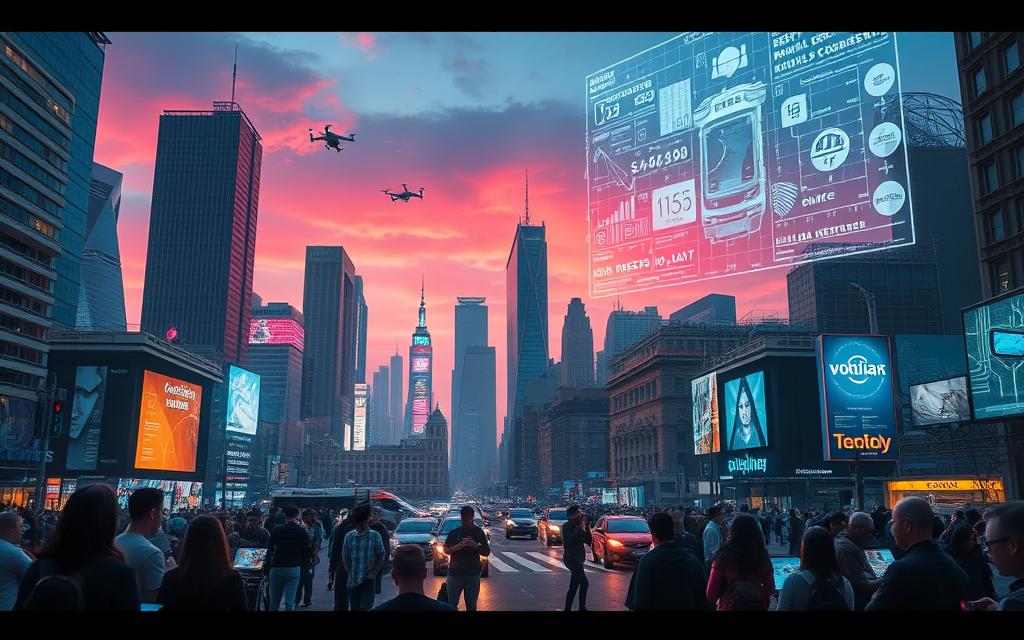
Digital innovations have changed our world fast. In just 20 years, they’ve reached half the developing world. This has brought big changes to society.
The digital transformation changes every part of our lives. It affects how we talk to each other and our work. New tools deeply change our daily lives.
These technology effects bring both great chances and big problems. While we connect more, worries about privacy, security, and fairness grow too.
Knowing how modern technology impacts us helps us understand our digital world. This look shows the two sides of technology’s role in our lives.
The Transformation of Personal Communication and Social Behaviour
Digital communication has changed how we talk to each other worldwide. It has brought us closer together but also made us face new challenges.
Instant Messaging and Social Media Platforms
Apps like WhatsApp and Facebook Messenger have changed how we stay in touch. They let us talk to each other no matter where we are.
Evolution of interpersonal relationships
These digital tools have changed how we connect with others. We feel like we need to be always available.
Studies show that while these apps can bring us closer, they can also make us feel lonely. A University of Pennsylvania study found that using them a lot can make us feel lonelier despite being connected.
Formation of digital communities and networks
Social media helps us find people with similar interests, no matter where they are. It lets us connect with others who share our passions.
Related Posts:
- How Technology Affects Privacy Data Security in the…
- How Technology Is Used in Everyday Life From Smart…

- A Technology Habit You Practice Today Common Digital…

- How Technology Affects the Human Brain Cognitive and…
- How Technology Is Negatively Affecting Society The…

- What Is a Technology Professional Roles Skills and…
But, these platforms can also make us see only one side of things. They use algorithms to show us content that matches our interests, which can limit our exposure to different views.
Video Conferencing and Remote Presence Technologies
Tools like Zoom and Microsoft Teams have changed how we work and connect. They became key during the recent global challenges.
Bridging geographical divides in personal connections
Video calls have made it easier for families and friends to stay in touch, no matter the distance. Grandparents can now read bedtime stories to their grandkids on the other side of the world.
Business meetings can now happen across oceans without a hitch. But, not everyone has access to these technologies, which can leave some people behind.
Psychological effects of screen-mediated communication
Talking through screens can make us miss out on important non-verbal cues. This can lead to misunderstandings and feeling tired of talking.
Many people feel “Zoom exhaustion” after long video calls. Seeing ourselves on screen can make us feel self-conscious during conversations.
| Communication Type | Strengths | Limitations | Psychological Impact |
|---|---|---|---|
| Instant Messaging | Immediate response, multitasking friendly | Lacks tonal nuance, promotes brevity | Can increase anxiety through expectation of immediate response |
| Social Media | Community building, information sharing | Algorithmic bias, comparison culture | Linked to both social connection and isolation feelings |
| Video Conferencing | Visual cues, group interaction | Technical barriers, performance anxiety | Screen fatigue but valuable for maintaining long-distance relationships |
These platforms have changed how we stay connected in the digital world. Finding the right balance between online and offline interactions is key to our social behaviour.
Revolutionising Work Practices and Professional Environments
Technology is changing how we work and where we work. The modern workplace is evolving fast, thanks to digital innovation and new employee expectations.

The Shift Towards Remote and Hybrid Working Models
Digital tools helped keep businesses running during tough times. They showed that many jobs can be done from home. This led to more flexible work options across different industries.
Flexibility benefits versus possible isolation
Working from home has its perks, like saving time and improving work-life balance. It lets employees control their schedules and workspaces.
But, there are downsides too. Some feel lonely and struggle to keep work and personal life separate. Missing out on spontaneous chats at the office can hurt teamwork and creativity.
During the pandemic, people used apps and online classes to stay well while working from home. These digital tools helped fight the isolation of remote work.
Automation and Artificial Intelligence Integration
Companies are using smart tech to make work easier and more efficient. This change is affecting jobs in almost every field.
Job displacement concerns across sectors
Studies say about 800 million jobs might be automated by 2030. This automation effects worries many workers in various fields.
It’s important to help workers who might lose their jobs. They need training to fit into new roles.
Emergence of new technology-focused careers
Even as some jobs disappear, new ones are emerging. The move towards sustainable economies could create 24 million jobs worldwide.
New career paths include:
- Data science and analytics
- AI ethics and governance
- Renewable energy technology
- Cybersecurity specialisation
The AI workplace needs people to keep learning. Workers must be open to retraining to succeed in this changing world.
How Does Technology Impact Us in Educational Development
Educational technology has changed learning spaces a lot. It brings new chances and problems for both students and teachers. Digital tools have changed how we learn, making it easier to get knowledge but also adding new ways to learn well.
Digital Learning Management Systems
Platforms like Moodle and Blackboard have changed how we share and manage learning content. They create online spaces where students can find materials, do homework, and get feedback, no matter where they are.
Enhanced accessibility and personalised learning paths
Learning management systems have made learning more accessible for different students. They allow students from anywhere to join in, even if they can’t be there in person.
These systems help students learn in their own way. They track how each student is doing. This helps teachers see what each student needs to learn better.
Gamification and Interactive Learning Tools
Adding game-like elements and interactive tools makes learning more fun. These tools use game design to make learning exciting and fun.
Improved student engagement metrics
Studies show that technology can make students more involved and remember things better. Interactive tools often have features like tracking progress and giving rewards. This makes students want to learn more.
These tools give quick feedback and rewards that old teaching methods often don’t. This leads to more students finishing their work and doing better in school.
Potential for increased distraction
Even though interactive tools make learning fun, they can also be a distraction. The same things that make learning fun can also take students away from what’s really important to learn.
Teachers need to find a balance. They must use new technology wisely to help students learn, not get distracted.
Healthcare Innovations and Personal Wellness Management
Digital health technologies have changed how we access healthcare and track our wellness. They are key advancements in our daily lives and wellbeing.
Telemedicine and Remote Patient Monitoring
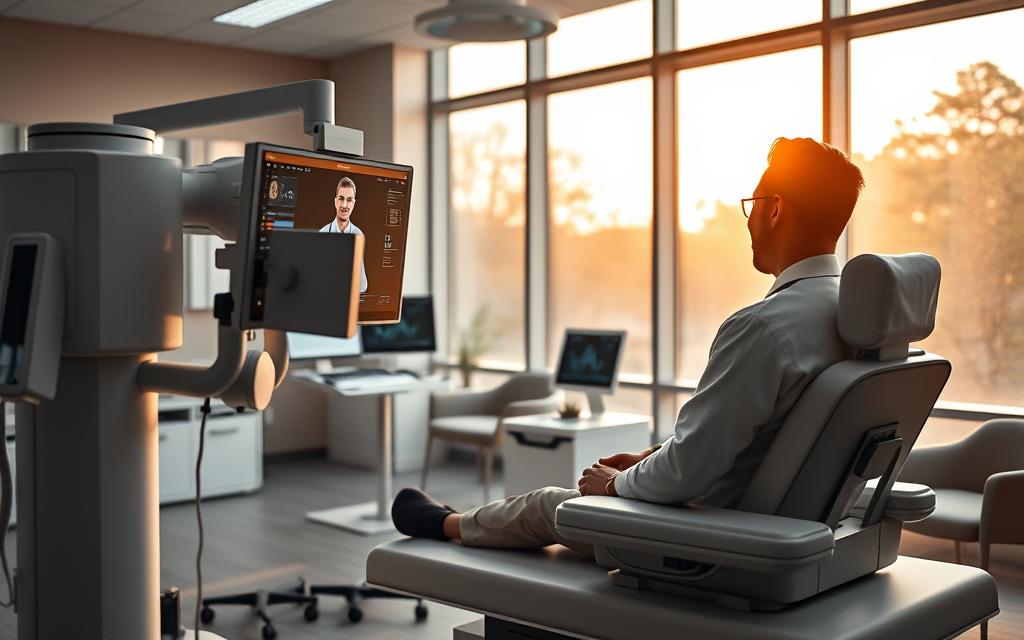
Telemedicine has changed healthcare by allowing remote consultations and patient monitoring. It lets doctors treat patients without being in the same place.
Democratising access to medical expertise
Remote healthcare has made specialist care more accessible, even for those in rural areas. Patients can now talk to top doctors without leaving home. This saves time and money and improves health.
AI is also helping by making accurate diagnoses and saving lives. It does this by catching health issues early.
Wearable Fitness Technology and Health Tracking
Wearable devices like Fitbit and Apple Watch became more popular during COVID-19. They help people track their health from home.
Data-driven personal wellness approaches
These devices track heart rate, sleep, activity, and blood oxygen. They give users insights to make better health choices.
Privacy and data security considerations
Health tech collects personal data, so keeping it safe is vital. Users need to know how their data is handled and protected.
| Wearable Device Type | Key Health Metrics Tracked | Primary Benefits | Data Security Features |
|---|---|---|---|
| Fitness Trackers | Steps, calories, heart rate | Activity motivation, basic health monitoring | Basic encryption, user consent protocols |
| Smart Watches | ECG, blood oxygen, sleep analysis | Comprehensive health insights, emergency alerts | Advanced encryption, health data separation |
| Medical Grade Wearables | Continuous glucose, blood pressure | Chronic condition management, clinical data | HIPAA compliance, medical data protection |
Digital health solutions are changing healthcare for the better. They help us manage our health in a more proactive way.
Smart Home Integration and Domestic Lifestyle Changes
Our homes are getting smarter, changing how we live. Smart home tech makes our homes more efficient, comfy, and green.
Automation of Routine Household Tasks
Home automation is making daily chores disappear. Robotic vacuums clean on their own, and smart appliances work when we want them to.
Voice assistants like Amazon Alexa or Google Home make controlling our homes easy. They save us time and make life more convenient.
Time efficiency and convenience benefits
Smart home devices save us a lot of time. Things like programmable coffee makers and smart lights make our days easier.
We can even control our homes from anywhere using apps. This adds to the convenience of smart home tech.
- Reduced manual intervention in daily tasks
- Customisable scheduling for household operations
- Remote monitoring and control capabilities
- Integration with personal calendars and routines
Energy Management and Sustainable Living Solutions
Smart home tech is key for living greener. It helps us use less energy and save money.
Tools that track energy use help us make better choices. This tech supports big goals for a better planet.
Environmental impact reduction strategies
Smart thermostats learn our habits and adjust the temperature. This saves energy. Solar panels work better with smart tech too.
These steps help our homes be more eco-friendly. Smart systems turn off lights and appliances when not in use. This cuts down on energy waste.
Smart home tech is a big step towards greener homes. It balances our need for convenience with caring for the planet.
These systems show how tech can help us live more sustainably. Home automation is a real way to make our homes better for the planet.
Transportation Evolution and Urban Mobility Patterns
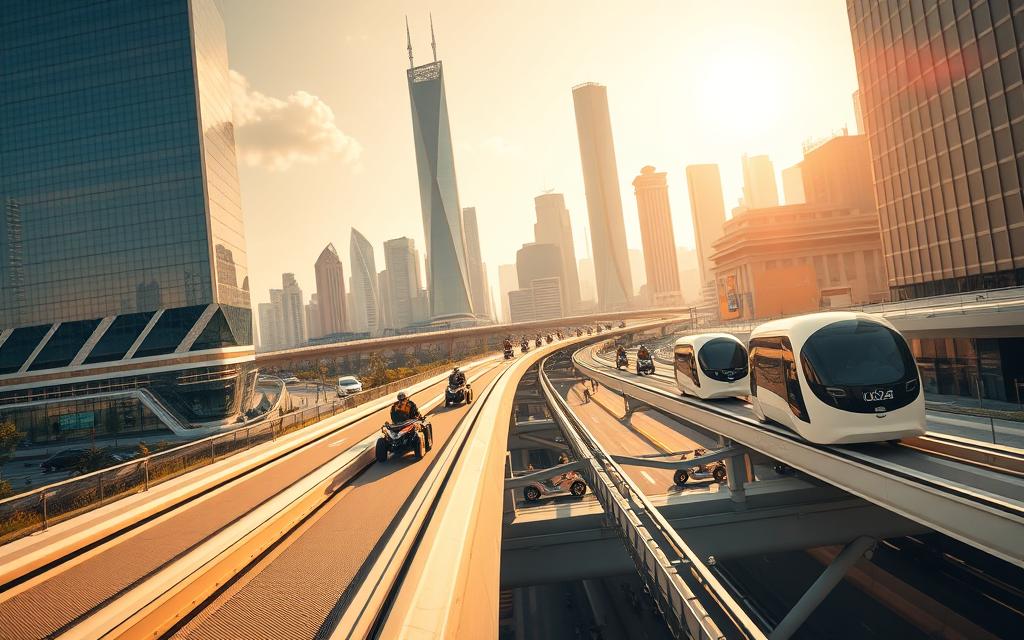
Modern transport systems are changing fast with digital tech. This changes how we travel in cities. It impacts our daily commutes, the environment, and the economy.
Real-Time Navigation and Ride-Sharing Services
Digital maps like Google Maps and Waze have changed city travel. They give live traffic updates and suggest the best routes. This saves time and cuts down fuel use.
Ride-sharing apps like Uber and Lyft have changed how we travel. They offer flexible travel options instead of taxis or buses. This means fewer cars on the road during busy times.
Transformation of urban commuting behaviours
Thanks to digital tools, we travel more flexibly. Many use ride-sharing for the first or last part of their journey. This makes daily travel more efficient.
Tools like Google Maps help us deal with traffic. We can change our route quickly if needed. This makes travel less stressful and saves time.
Electric Vehicle Adoption and Infrastructure
Electric cars are a big change in transport. More people are choosing them as prices drop and ranges get longer. Governments and green awareness help too.
There’s a push to build more charging points. This is to help people feel secure about driving electric. Public and private groups are working to add more stations.
Reducing transportation carbon footprints
Electric cars are key to making transport greener. They don’t pollute like regular cars. As we use more clean energy, electric cars get even cleaner.
Using electric cars could create lots of jobs. This is in making cars, building charging points, and keeping them running. It’s good for the planet and the economy.
The future of transportation technology is exciting. It’s changing how we move around cities. From better navigation to electric cars, it’s making travel more efficient and green.
Entertainment Consumption and Leisure Activities
Digital entertainment has changed how we enjoy our free time and watch media. It has turned watching into an interactive experience. This has made entertainment more engaging and accessible.
Streaming Services and On-Demand Content Access
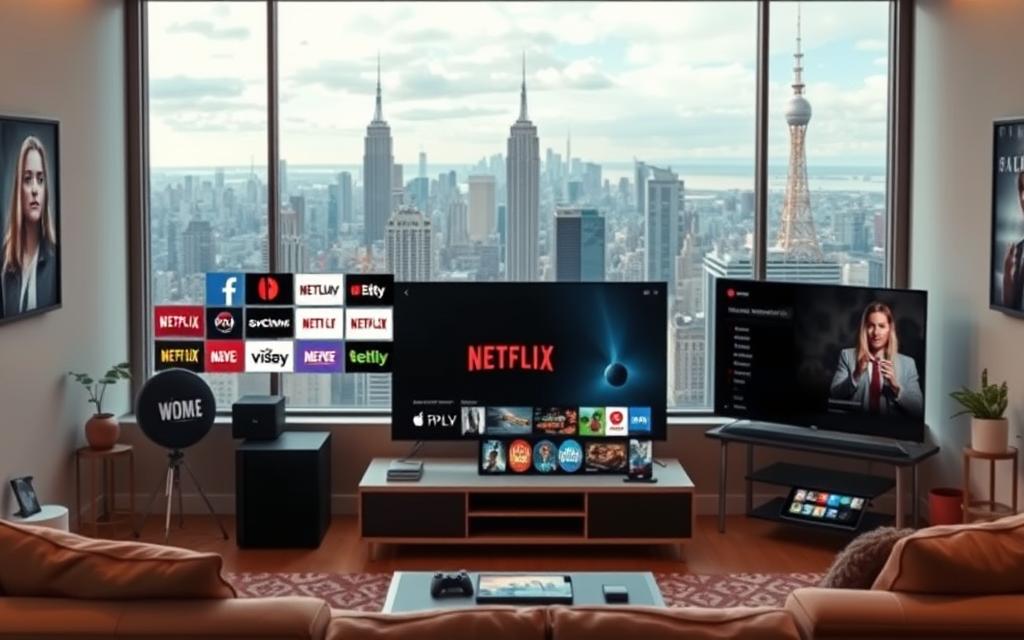
Platforms like Netflix, Spotify, and YouTube have changed how we watch media. They offer instant access to lots of content. This shift is from fixed schedules to watching what you want, when you want.
Now, we have more control over what we watch. We can pick what to watch, when, and on different devices.
Decline of traditional media consumption models
Traditional TV and buying media on discs have seen big drops. Streaming services make it easy to watch what you want, anytime.
Studies show video games can help with focus but too much can be bad. This shows the mixed effects of digital entertainment on our minds.
Virtual and Augmented Reality Experiences
VR technology takes you into new worlds. Devices like Oculus VR headsets make games feel real.
Augmented reality adds digital info to the real world. It uses phone cameras or special glasses. This mix of real and digital worlds is exciting.
Creating immersive entertainment environments
These technologies offer experiences that old media can’t. They make us active, not just watchers.
The immersive quality of VR is the next big thing in entertainment. It gives us rich, real experiences that screens can’t match.
| Aspect | Traditional Media | Streaming Services |
|---|---|---|
| Content Access | Scheduled programming | On-demand availability |
| Device Compatibility | Limited to specific devices | Cross-platform accessibility |
| Content Variety | Limited selection | Extensive libraries |
| User Control | Minimal interaction | Full playback control |
Entertainment tech keeps getting better, giving us more advanced experiences. Streaming and immersive tech show how digital changes our fun activities.
Conclusion
Digital tools have changed how we communicate, work, learn, and enjoy ourselves. Microsoft Teams lets us work together from anywhere. Tesla is leading the way in electric cars, making our lives easier and more exciting.
But, we must also see the downsides. Technology can be unfair and threaten our privacy. Social media connects us but can also make us feel lonely and unequal.
Our choices shape technology’s impact. We need to regulate it wisely to enjoy its benefits and avoid its dangers. This is true for our personal lives, workplaces, and society as a whole.
Looking ahead, technology offers great chances and big challenges. How we handle AI, privacy, and fairness will decide if tech brings us together or drives us apart. It’s a big responsibility in our digital world.
