



The accounting world has changed a lot in recent years. Now, it uses advanced tools to make old tasks easier.
Studies from Stanford and MIT show a big change. Instead of taking jobs, AI in accounting software makes professionals better. They can help more clients and finish tasks quicker.
Service quality has also gone up. This change moves from fearing AI to seeing it as a help.
These changes bring big accounting automation benefits to firms that adopt them. Experts can now spend more time on important analysis, not just on entering data.
Intelligent systems open up new chances for growth and better work. This part looks at how these tech changes have changed accounting today.
The Evolution of Accounting Technology: From Ledgers to Digital Systems
Accounting has changed a lot, moving from old ways to new digital systems. This big change has changed how financial experts work. Now, they use digital tools instead of paper and pen.
Early Manual Accounting Systems and Their Limitations
Old accounting used paper ledgers and pen and paper. Bookkeepers spent a lot of time writing down transactions. They used simple math to keep track of money.
These old systems had big problems. Mistakes were common, leading to big money errors. Also, it took a lot of time to do bookkeeping, making reports old news.
Related Posts:
- How to Make Money in Information Technology Careers…

- What Is a Technology Professional Roles Skills and…

- How Technology Impacts Us The Broad Effects on Daily Life

- How Advanced Is China in Technology A Look at Its…

- How Technology Is Used in Everyday Life From Smart…

- What Does CPE Stand for in Technology Customer…

Storing all these records was hard. Companies needed a lot of space for years of records. It was hard to find things later. And, different systems made audits hard.
The Advent of Computerised Accounting Software
Computerised systems came in the late 20th century. They made basic math and data organisation easier. This cut down on mistakes and made things faster.
These systems had databases for complex money work. They could process transactions quickly. They balanced ledgers and made reports with little help from humans.
These systems were the start of today’s financial tools. They set the stage for even better tech like robotic process automation accounting systems.
Transition to Cloud-Based Accounting Solutions
Cloud tech changed accounting by making it easier to work together and access from anywhere. Now, many can work on financial data at the same time, no matter where they are.
These cloud solutions work well with other business tools. They make it easy to get bank info and handle payments. This makes managing money easier.
Cloud accounting also means better analytics. It makes it easy to use machine learning financial analysis. This gives deeper insights into how a business is doing.
The journey keeps going. New tech like AI and automation are making accounting even better. They are changing how businesses handle their money.
How Has Technology Affected Accounting Automation
The digital world has changed accounting a lot. It’s moved from simple computer use to advanced automation. Now, technology handles boring tasks well and gives deep insights into money matters.
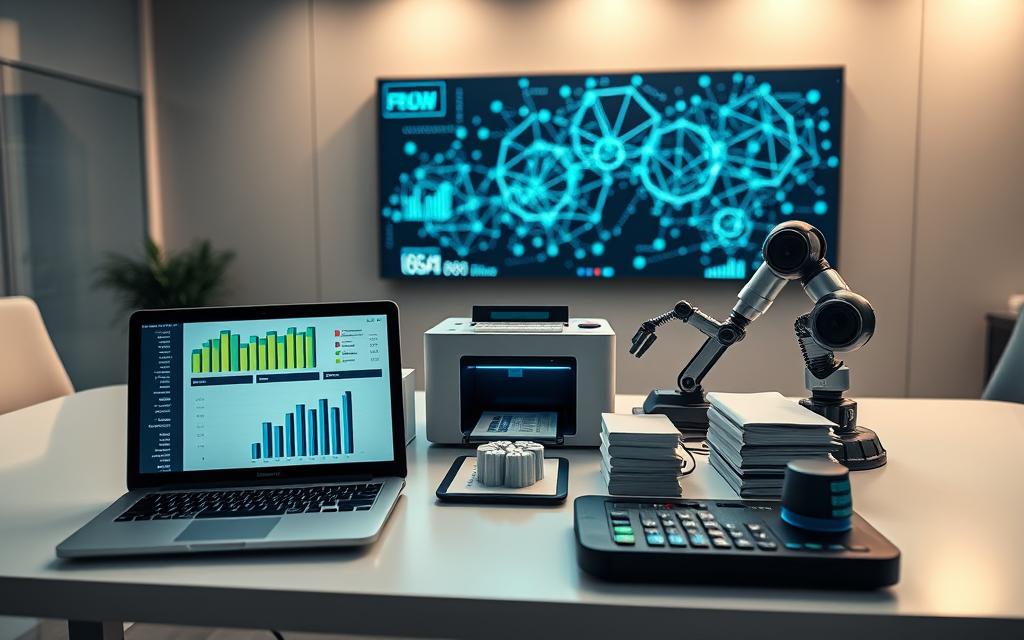
Key Automation Technologies Transforming Accounting Processes
Many new technologies are changing accounting. They work together to make financial work smooth and accurate. This means less human work and more precision.
Robotic Process Automation (RPA) in Accounting
RPA systems do tasks that humans do, but without getting tired. They handle things like data entry and report making with no mistakes.
These digital helpers work all the time. They deal with lots of transactions quickly. They’re key in cloud accounting solutions, fitting well with other systems.
Machine Learning Algorithms for Financial Analysis
Machine learning goes beyond simple tasks. It finds patterns in financial data that people might miss.
It gets better with time, making it great for complex tasks. This tech is key for predicting financial trends and spotting oddities.
Real-World Applications of Accounting Automation
These technologies have made a big difference in accounting. They’ve made things more efficient than ever thought possible.
Automated Invoice Processing and Accounts Payable
Automated invoice processing has changed accounts payable. It uses OCR to read invoices, no matter their look.
It checks invoices against orders and receipts. It sends odd ones for a human check while paying the rest automatically.
AI in e-invoicing could save businesses up to $28 billion in the next decade. This is due to lower costs and better efficiency.
This means no more manual entry for AP. It’s a big step forward in accounting, as shown in this article on accounting tech changes.
Bank Reconciliation Automation
Tools for bank reconciliation compare records with bank statements fast. They find differences using smart algorithms.
They highlight unusual transactions for a check. They get better with time, making fewer mistakes.
This has cut down the work needed for monthly reconciliations. Finance teams can now focus on the important stuff, not just routine tasks.
Artificial Intelligence Revolution in Modern Accounting
The accounting world is changing fast thanks to artificial intelligence. AI is not just about automating tasks. It’s about making smart decisions like humans do, but much faster and on a huge scale.
AI-Powered Predictive Analytics and Forecasting
AI predictive analytics accounting tools are changing the game. They turn old data into useful insights. These tools spot trends that humans might miss.
Machine learning gets better over time. It can predict things like cash flow and revenue with great accuracy. This helps businesses make smarter choices based on data.
Natural Language Processing for Financial Document Analysis
Natural language processing finance tools are a big deal. They can understand contracts, invoices, and reports like humans do.
These tools pull out important info from documents. They sort out expenses and spot errors quickly. This lets accounting teams focus on big-picture thinking, not just data entry.
Fraud Detection and Risk Assessment Through AI Systems
AI is a game-changer for stopping fraud. It checks millions of transactions at once to find suspicious activity.
AI systems can:
- Watch over all transactions in an organisation
- Look for unusual behaviour
- Get better at spotting fraud as it learns
They learn from past fraud cases. This makes them better at catching new threats. It keeps businesses safe from fraud.
Benefits and Challenges of Technological Integration in Accounting
The move to digital accounting brings big chances and big challenges. Automation and AI are great, but they need careful thought. This includes looking at how they work and their ethical sides.

Operational Efficiency and Cost Reduction Benefits
Today’s accounting tech makes things much faster and cheaper. Studies show AI helps accountants work with more clients and finish tasks quicker.
This means big savings. For example, less manual work, quicker complex transactions, fewer mistakes, and better use of resources.
- Reduced manual data entry requirements
- Faster processing of complex transactions
- Minimised error rates and rework
- Improved resource allocation
By automating simple tasks, accountants can focus on more important work. This makes their services better and more valuable.
Data Security and Privacy Considerations
As everything goes digital, keeping data safe becomes a big issue. Accounting firms deal with very sensitive info. They need strong security, even more with AI.
Big security worries include:
- Protecting client financial data from cyber threats
- Ensuring compliance with data protection regulations
- Maintaining confidentiality in cloud-based systems
- Implementing secure access controls
“The integration of advanced technologies must be accompanied by equally advanced security protocols to maintain client trust and regulatory compliance.”
AI systems that check for fraud need special care. They handle a lot of sensitive data. Firms must keep up with tech and security.
Skills Gap and Training Requirements for Modern Accountants
Accounting tech is changing fast, and skills are needed to keep up. Old skills are not enough anymore. Now, accountants need to know about digital stuff too.
A 2024 survey found many firms are slow to adopt AI. They worry about their staff being ready. This shows the need for training.
Today’s accountants need to learn:
| Traditional Skills | Emerging Skills | Training Priority |
|---|---|---|
| Financial reporting | Data analytics | High |
| Auditing principles | AI system collaboration | Medium-High |
| Tax compliance | Cyber security awareness | High |
| Client management | Technology implementation | Medium |
Keeping up with new tech is key for accountants. Firms should invest in training. This should cover both new skills and the ethics of new tech.
Getting tech right in accounting is a big challenge. But, those who succeed will do well in the future.
Conclusion
Technology has changed accounting a lot. It has moved from just bookkeeping to a role that uses data for strategy. Now, computers and AI do the simple tasks, letting accountants focus on more complex work.
Studies show that AI works best when it teams up with people. Senior accountants see AI as a partner, not a replacement. They use their skills where decisions need to be made with care and ethics.
Using new tech brings both chances and challenges. Keeping financial data safe is key as everything goes digital. Accountants also need to keep learning to stay up to date with new tech.
Accounting will keep changing as new tech gets better. Firms that use tech wisely and also value human insight will do well. Accountants who adapt will lead in finance and strategy.
